The Medium Reimagined: From Matter to Risk
Introduction
Art has always needed something to pass through — a surface, a sound, a gesture, or a system.
This channel between idea and reality is what we call a medium.
It is the space where imagination takes shape and becomes shareable.
Throughout history, the meaning of the medium has changed many times.
At first, it was purely material: pigment, stone, or clay.
Later, it became a matter of form and process.
Today, as art grows more conceptual and interdisciplinary, the idea of the medium expands again.
It becomes not only something we use, but something we design —
and within this expansion, risk and decision-making emerge as the most essential mediums of all.
This new understanding does not reject traditional forms;
instead, it includes them all within a wider field.
In this field, every artwork — no matter its shape or scale —
is built upon the same foundation: the act of choosing within uncertainty.
1. Material Beginnings
In early human history, art and matter were inseparable.
The first cave paintings were not simple decorations,
but attempts to extend human presence into the world.
Stone, pigment, sound, and rhythm were ways to make life visible —
to preserve existence beyond the body.
Each material carried its own law and discipline.
Stone required endurance, pigment demanded patience, sound depended on breath.
To work with a medium meant to understand its resistance, its fragility, and its time.
Through this dialogue between the artist’s will and the material’s nature,
art became a conversation between humanity and the world.
2. The Modern Separation
The Renaissance gave artists new tools — perspective, light, and realism.
The medium became a window to the world, a method for representation and control.
But with modernism, the artist turned that window inward.
The focus shifted from what art shows to what art is.
In the mid-twentieth century, critic Clement Greenberg argued that every medium should remain faithful to its own nature.
Painting should explore flatness, sculpture should explore space, and film should explore time and movement.
This idea of “purity” gave rise to formalism: art as a reflection of its own limits.
Yet this approach also revealed a paradox.
By defining clear borders, modernism made those borders visible — and therefore open to question.
Once the frame of the canvas was doubted,
the idea of a single, stable medium began to dissolve.
3. The Post-Medium Era
The early twentieth century saw a radical shift.
When Marcel Duchamp placed a urinal in a gallery and named it Fountain (1917),
he changed the function of the medium forever.
The material no longer mattered; the decision did.
Art was no longer what was made, but what was declared.
In the 1960s and 70s, conceptual art developed this idea further.
Artists like Sol LeWitt and Joseph Kosuth used language, instruction, and thought as their mediums.
Meaning was now produced by structure, not substance.
Rosalind Krauss later described this as the “post-medium condition” —
a time when the borders between painting, photography, performance, and video disappeared.
Art became a network of relations:
an experience of time, idea, and presence rather than a collection of fixed objects.
By the end of the century, digital technology expanded this transformation.
Pixels replaced pigments; code replaced canvas.
Art became procedural — something that behaved, reacted, and evolved.
The medium was no longer a material, but a system of interaction.
4. The Medium of Risk
If every medium defines how an artwork behaves,
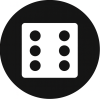
then risk can be seen as the most fundamental medium of all.
Risk is the field where control meets uncertainty —
where choice becomes visible.
When an artist builds a work around risk and decision-making,
they are not shaping matter but designing conditions.
They decide what is known, what can change, and what remains hidden.
The work becomes a universe with its own rules,
a system of possibilities where both artist and participant make choices that shape meaning.
In this way, risk becomes the invisible material of awareness.
It holds tension, freedom, and transformation —
the same elements that define artistic experience itself.
Risk is not only the subject of art;
it is the medium through which art lives.
5. Dimensional Freedom
Traditional media are often described through spatial dimensions:
painting is two-dimensional, sculpture three, cinema four (space plus time).
But when the foundation of art is risk and decision-making,
these dimensions become flexible and variable.
A single-voice podcast can exist as a one-dimensional universe,
built entirely from time and sound.
A book creates a two-dimensional field of words and imagination.
A performance, installation, or digital environment can combine multiple mediums,
expanding into three, four, or even more dimensions.
There is no hierarchy between them.
A simple, one-dimensional universe can be as complete as a complex one,
because completeness does not depend on scale but on coherence.
As long as the structure of risk and decision exists, the universe is whole.
The number of dimensions depends on the chosen mediums,
but the presence of risk is what gives them life.
6. Integrating All Mediums
Seeing risk and decision as artistic mediums does not cancel the past; it connects it.
Painting, sculpture, film, music, writing, performance, and digital art
all remain vital — but they now operate inside a broader framework.
Each medium contributes a specific language of experience:
color, form, sound, rhythm, text, movement, light.
But all of them depend on the same inner structure: choice under uncertainty.
Every stroke, cut, pause, or silence is a decision — a moment of risk transformed into meaning.
This understanding allows all mediums to coexist and interact.
Risk becomes the invisible fabric linking ancient and contemporary art —
from the first marks on stone to the newest virtual worlds.
It provides a shared foundation for all forms of expression.
7. The Artist as Designer of Possibility
In this expanded field, the artist is not simply a maker but a designer of universes.
They create the conditions in which experience can unfold.
They decide how much freedom or control exists,
how time moves, how chance operates,
and how the participant engages with the unknown.
The artist no longer needs to control outcomes.
Instead, they design frameworks of possibility —
open systems where events and meanings emerge naturally.
This shift transforms the creative act from production to creation of law:
from making an object to constructing a living environment of awareness.
8. A Universe in Any Form
Because risk is the core medium,
an artistic universe can take any form and any number of dimensions.
It may be simple or complex, intimate or collective, physical or digital.
A podcast, a book, an installation, a conversation, or a virtual world
can all be valid expressions of the same principle —
as long as they operate through risk and decision.
This flexibility gives the concept infinite range.
Art becomes not a style or a format, but a state of structure.
Each universe has its own rules of time, space, and interaction,
and the artist defines those rules according to the nature of their chosen mediums.
9. Conclusion: The Medium of Awareness
The history of art can be read as a continuous search for the right medium —
from matter to image, from process to perception.
Each era redefined how art connects thought and experience.
Today, that search leads to its most abstract and essential form:
the medium of risk and decision-making.
This medium does not depend on tools or materials.
It exists wherever uncertainty meets intention —
where an artist, a participant, or a system makes a choice that cannot be fully predicted.
In that moment, awareness becomes tangible.
All other mediums — painting, sound, movement, text —
are the languages through which this deeper medium speaks.
Risk is the structure that gives them coherence and life.
Art no longer depends on what we use,
but on how we choose.
Risk is not decoration or danger;
it is the ground on which art exists.